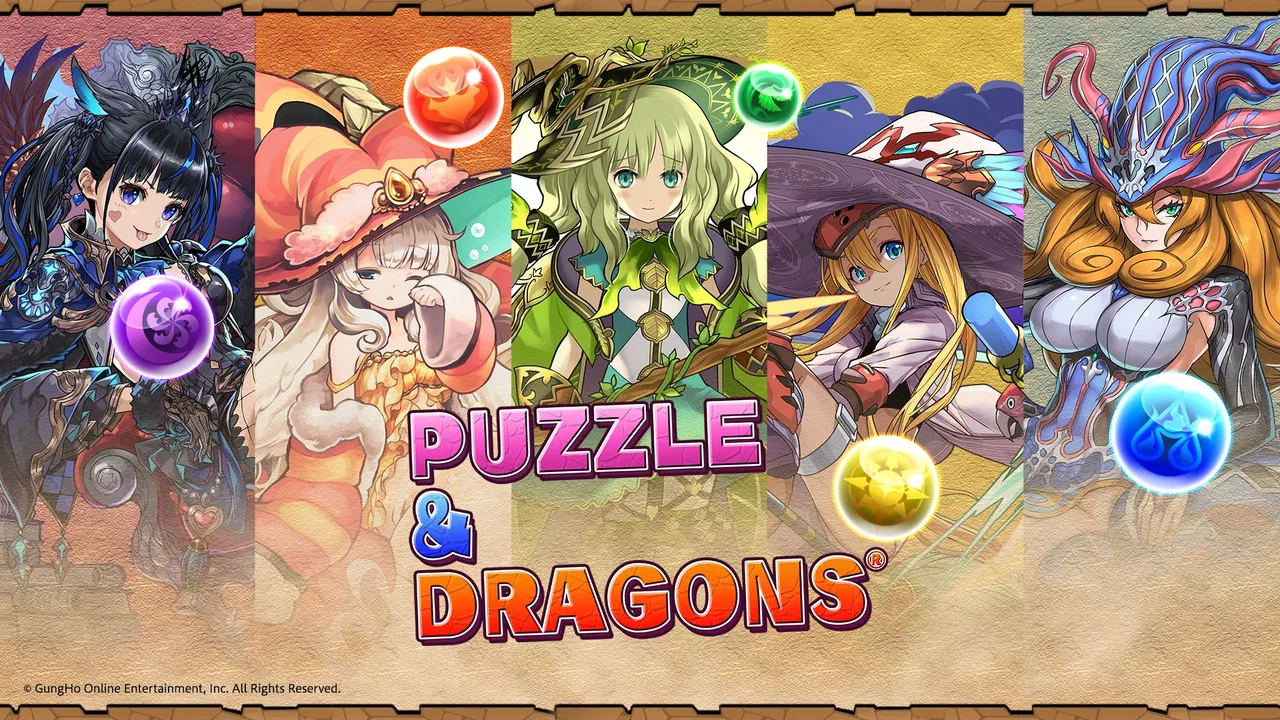
Puzzle & Dragons
- 3.9
- Rating
- 5.00M
- Installs
- Free
- Price

 Analysis by App-foxy
I first understood the appeal of Puzzle & Dragons when I treated it less like a quick matching game and more like a small adventure I could keep returning to. A short session can begin with arranging orbs on the board, but the decisions continue outside the puzzle itself: which monsters deserve attention, which team is suitable for the next challenge, and whether a tempting resource should be spent now or saved for later. That combination gives the game more staying power than a simple score-chasing puzzler.
It is a free puzzle game from GungHo Online Entertainment, Inc., built around an adventure structure rather than isolated boards. The game has been available since December 9, 2012, and its long presence is easy to understand once the different layers start working together. I found something familiar in the basic matching, but also enough planning to make each new session feel purposeful. It is aimed at players aged Everyone 10+, and that makes it approachable for many households, although younger players may still need guidance around spending and account boundaries.
How it works when one device is shared at home
In a shared-device household, the most practical strength is that a person can play a meaningful amount without needing a long uninterrupted block of time. I can imagine one family member taking a turn while waiting for an appointment, another using the same device later, and the game still feeling worthwhile in both cases. The puzzle board provides an immediate activity, while the collection and adventure elements give returning players a reason to remember what they were working toward.
You May Also Like

 Blood Strike: 2.5 Anniversary
Blood Strike’s Loadouts Turn Every Drop Into a Tactical Gamble
A close look at Blood Strike’s custom loadouts: how fast access to signature weapons reshapes its battle royale rhythm, rewards preparation, and narrows the gap between fights.

 Pandora - Music & Podcasts
Pandora’s Music Is Easy to Start, but Harder to Recover
Pandora’s strength is its low-effort path from a seed to a station. Its weak spot is how much confidence it asks you to place in connection, setup, and quiet recovery.

 8 Ball Pool
 Is Built on Rivalries, Rematches, and Routine
A close look at the rivalries, rematches, shared routines, and unanswered safety questions that turn a quick pool match into a persistent mobile community.

 Samsung Music
’s Quiet Strength Is Playing What You Already Own
Its reach comes less from spectacle than from dependable access to a personal library. That simplicity is both the app’s strongest retention engine and its ceiling.

 AccuWeather: Weather Radar
AccuWeather Review: A Quick, Clear Forecast for Everyday Decisions
For everyday plans, the best forecast is the one you can understand quickly. AccuWeather makes rain timing, radar, and local conditions easy to act on, with a few trade-offs.

 Hill Climb Racing
Why Hill Climb Racing Still Turns Crashes Into One More Run
A tiny car, a bumpy hill and one more upgrade: Hill Climb Racing keeps resurfacing because its simple chaos makes every near-miss feel personal.
More From Our News Desk



That flexibility matters more than it may seem. A typical matching game is easy to hand to someone else because there is little context to explain, but Puzzle & Dragons asks the player to understand a developing team and a longer-term route through its content. If I pass the device to another person, I would not treat it like a completely interchangeable arcade game. I would first explain which team is being developed, what the current goal is, and which resources should not be used casually.
The game works especially well for a household where players enjoy comparing decisions without necessarily playing at the same time. One person can discuss a difficult board, another can suggest a different way to arrange the orbs, and both can learn from the result. That creates a useful social layer without requiring the game to become a formal multiplayer activity. The important boundary is simple: each person should know whose progress is being changed before starting a session.
The best shared-device habit is to pause before beginning and identify the active player. This avoids the most frustrating household mistake: someone opens the game intending to try one quick puzzle and accidentally spends a resource, changes a team, or advances a plan that belonged to somebody else. I would also recommend keeping a short spoken note such as “working on the fire team” or “saving this item,” because the game’s deeper systems make silent handoffs surprisingly risky.
Why the puzzle board rewards careful play
The central puzzle is not just about finding one obvious match. Moving an orb across the board can set up several matches in sequence, so the first arrangement I notice is not always the best one. I enjoy that the board rewards looking ahead rather than tapping the first available group. A player who takes a moment to trace a route can often create a more useful turn than someone who reacts immediately.
For a new player, I would begin by focusing on consistency rather than spectacular combinations. Try to recognize where an orb will travel before committing to the movement, and watch what the remaining board may do after the first match disappears. This approach makes the game feel less random and helps explain why a failed turn happened. It also gives an adult and a child something concrete to discuss if they are learning together.
There is a trade-off here. Players looking for a pure, instantly readable puzzle may find the wider adventure structure distracting. The board is only one part of the experience, and progress depends on choices beyond matching. That is a strength for people who like planning, but it can feel like extra homework to someone who wants a few completely self-contained rounds with no collection decisions attached.
Setting boundaries before the first serious session
Because the game is free to start and includes in-app purchases ranging from $0.99 to $74.99 per item, I would establish household rules before handing the device to a child or guest. The age guidance is Everyone 10+, but an age label does not replace a conversation about purchases. In my view, the clearest rule is that no one spends money or uses premium resources without asking the device owner first.
This is also where account boundaries matter. If several people use one phone or tablet, decide whether the game belongs to one primary player or whether everyone is simply taking turns with the same progress. A shared save can be convenient, but it makes accidental changes more consequential. Separate personal devices may be the better choice when several players want independent teams, different goals, or complete control over their own progress.
I would not assume that a younger player understands the difference between an ordinary in-game action and a purchase-related decision. Before play begins, I would show them which buttons are safe to use freely and which actions require an adult. That small explanation is more useful than promising to supervise every second, especially in a household where the device is passed around throughout the day.
The current version is 23.3.2 and the game requires at least OS 9. For an older shared device, I would check compatibility before planning a household routine around it. The practical question is not only whether the game can be installed, but whether the device is comfortable for the person who will play it most. A small screen can make board movement harder to read, while an older device may make quick handoffs less pleasant even when the operating system meets the requirement.
Coordinating teams, resources, and expectations
The collection side creates the biggest need for coordination. A player may see a monster as an immediate upgrade, while another may prefer to save resources for a more suitable team. Neither choice is automatically wrong, but changing direction repeatedly can make progress feel scattered. I found it more satisfying to choose a broad plan first, then improve the team gradually instead of reacting to every new option.
For shared use, I would keep a simple household agreement: one person makes final decisions about the main team, while others can offer suggestions or practice puzzle movement. That may sound strict, but it prevents a common source of arguments. A player who has spent time building a particular strategy can be understandably annoyed if another person replaces a key member without realizing its purpose.
One useful workflow is to separate “practice turns” from “progress turns.” During practice, a family member can try arranging the board and talk through possible matches. During progress, the primary player handles the choices that affect the developing adventure. This gives beginners a safe way to learn the puzzle without turning every experiment into a permanent change.
Another worthwhile habit is to explain the reason behind a team choice rather than only naming the preferred monster. For example, say that a particular arrangement is being kept because it supports a planned style of play, not simply because it looks stronger. That teaches the underlying decision-making and makes coordination easier when the next challenge changes the value of different options.
The game’s depth also means that a household should agree on what “progress” means. One player may care about clearing new stages, another about collecting creatures, and another about improving puzzle skill. If everyone measures success differently, a shared session can feel disappointing even when the game is working as intended. I get better results when I set one modest goal for a session, such as learning a board pattern or testing a team, rather than trying to accomplish everything at once.
Age, trust, and the right kind of supervision
The Everyone 10+ rating makes sense for a puzzle adventure that can be enjoyed without treating it as a mature title. Still, I would judge suitability by the child’s patience and understanding, not only by the label. The game asks players to manage choices over time, and a child who is comfortable with matching but impatient with planning may need an adult to help explain why a quick decision is not always the best one.
Trust is more important than constant correction. I would rather agree on clear rules and review the game occasionally than interrupt every puzzle with instructions. A child can learn a great deal by describing why a move was chosen, especially if the adult asks questions instead of immediately taking over. “What do you want the next board to look like?” is more useful than simply saying “make a larger match.”
For teenagers and adults, the game is easier to recommend as a personal hobby. They can decide how deeply to explore the collection and how much time to spend refining their approach. For younger players sharing an adult’s device, I would keep the account owner nearby during purchases, team management, and any decision involving valuable resources. That is not a criticism of the puzzle design; it is a sensible boundary for any free game with paid items.
I also think the game is a poor choice for a child who becomes upset when progress is not immediate. The adventure structure rewards returning, experimenting, and learning, but it does not always provide the instant closure of a simple casual puzzle. A calmer player who enjoys gradual improvement is likely to get more from it than someone who wants every session to end with a clear, effortless win.
Where it stands beside other puzzle games
Compared with a conventional match-three game, Puzzle & Dragons offers much more to manage after the board is cleared. That extra layer is its main reason to choose it. Instead of only chasing a score or finishing a short level, I am encouraged to think about a developing group of monsters and how my puzzle decisions support the next part of the adventure.
The comparison also reveals the main limitation. If I want a quiet five-minute distraction with no team planning, a simpler match-three alternative is more convenient. Those games usually explain themselves faster and create fewer consequences when another person picks up the device. Puzzle & Dragons is better when I want a hobby with continuity, not merely a disposable time filler.
It also differs from a traditional role-playing game because the board remains the active skill test. Someone can understand the collection side but still need practice with movement and matching. Conversely, a strong puzzle player may progress quickly at first but later need to pay more attention to team decisions. I like that the game gives both types of player something to improve, although people who dislike switching between action and planning may find the combination uneven.
For a household, the choice depends on what kind of shared experience is wanted. Choose this game if family members enjoy discussing strategy, taking turns, and respecting one person’s developing progress. Choose a simpler puzzle if the priority is immediate handoff, independent rounds, and almost no explanation. Neither style is universally better; they serve different moods and different levels of commitment.
Practical ways to get more from each session
My first concrete tip is to avoid treating every board as a race. Before moving an orb, scan for a route that can create more than one match. Even when the eventual result is not perfect, the habit of planning the path makes the puzzle more deliberate and helps reveal why certain turns produce better outcomes.
My second tip is to use a session goal that matches the time available. If I only have a few minutes, I focus on puzzle practice or one clearly defined task rather than beginning a complicated team overhaul. When I have more time, I can review the team, consider the next challenge, and make decisions without rushing. This prevents the common mistake of starting a long planning process just before the device needs to be handed to someone else.
My third tip is particularly useful on a shared device: say out loud what should remain unchanged. A player might say, “Please do not spend the saved resource,” or “You can practice the board, but leave the team as it is.” That tiny piece of coordination protects progress better than assuming another person will understand the plan.
A fourth insight is to judge a new monster by how it fits the team, not only by whether it appears powerful. The collection system encourages attention to individual creatures, but a strong-looking addition may not improve the group if it does not support the intended approach. I found that thinking in terms of team purpose reduces impulsive changes and makes the adventure feel more coherent.
Finally, I would let beginners watch an experienced player complete a turn before explaining every system at once. Seeing the movement, matches, and aftermath in sequence gives the puzzle context. After that, the learner can try a turn and ask about the result. This is more approachable than presenting the whole game as a list of mechanics before anyone has touched the board.
Who should play and who should skip it
I recommend it to puzzle fans who want a longer-term adventure, players who enjoy collecting and organizing a team, and households that can agree on clear rules for a shared device. It is also a good fit for someone who likes improving through observation. The best moments come when a board move, a team decision, and a later challenge begin to feel connected rather than separate.
I would skip it if my only goal were instant, low-commitment matching. I would also hesitate to recommend it to a household where several people want completely separate progress but only one account or device is available. The game can be shared socially, but sharing does not automatically mean that every player’s goals will coexist comfortably.
The free entry point makes trying it straightforward, but the purchase range means I would not leave spending decisions vague. Adults who are comfortable managing that boundary should have no trouble setting expectations. Families looking for a game that can be handed to a child with no explanation about purchases or progress may prefer a simpler alternative.
With an average rating of 3.9 from around 130 thousand ratings and more than 5 million installs, it clearly has a substantial audience, though popularity does not remove the learning curve. I see those figures as a sign that the formula has lasting reach, not as a guarantee that every puzzle player will enjoy the collection layer.
My household verdict
After spending time with it, I see Puzzle & Dragons as a particularly good shared hobby when the household treats it as someone’s developing adventure rather than a communal toy that anyone can alter freely. The puzzle play is accessible enough to invite another person in, while the team and resource decisions require respect for the primary player’s plans.
For my own use, I would keep the first sessions short, explain the purchase boundary, and decide in advance who controls lasting changes. I would invite others to practice board movement and discuss strategy, but I would not assume that a shared device should mean shared ownership of progress. That distinction makes the game much less stressful and allows its deeper systems to become enjoyable instead of confusing.
My final recommendation is simple: choose it for thoughtful puzzle sessions with an ongoing adventure, not for completely consequence-free matching. GungHo Online Entertainment, Inc. has built a game that can reward patience, planning, and conversation. Its free price makes it easy to explore, its Everyone 10+ guidance keeps the audience broad, and its current version supports a long-running experience. Just set the household boundaries first, keep spending decisions with the account owner, and give each player room to enjoy the puzzle at their own pace.
FAQs for Puzzle & Dragons
01What is Puzzle & Dragons, and how does the gameplay work?
Puzzle & Dragons combines match-three puzzle battles with monster collection and role-playing elements. You clear groups of matching orbs by moving them around the board, then use the resulting combos to attack enemies. Between battles, you can collect, evolve, and organize monsters, build a team, and improve your strategy for increasingly difficult dungeons. The basic controls are easy to learn, but advanced combo planning takes practice.
02Is Puzzle & Dragons free to download and play?
Puzzle & Dragons is generally free to download, but it includes optional in-app purchases. Players can usually progress without spending money by completing dungeons, earning rewards, and managing resources carefully. However, paid currency may provide additional opportunities to obtain monsters, restore stamina, or access other conveniences. Before downloading, parents and users should review device purchase settings, since spending can add up during repeated attempts or limited-time events.
03Does Puzzle & Dragons require an internet connection?
An internet connection is normally required for many important features, including account access, event content, data synchronization, updates, and online services. Some parts of the game may appear accessible temporarily without a stable connection, but offline play should not be considered fully supported. A reliable connection is especially useful when entering dungeons or claiming rewards, because interruptions could affect progress or prevent the game from loading correctly.
04Is Puzzle & Dragons suitable for beginners, and does it require strong puzzle skills?
Puzzle & Dragons is suitable for beginners because its core matching system is introduced gradually, and early stages help players understand attacks, skills, team building, and evolution. You do not need expert puzzle skills to start enjoying the game. Nevertheless, later dungeons can become demanding, requiring longer combos, careful orb movement, resistance planning, and well-developed teams. New players should expect a learning curve as the available mechanics expand.
05What should I know about progression, team building, and in-app purchases before playing?
Progress depends on more than simply matching orbs. You will need to strengthen monsters, evolve useful units, choose leaders with compatible abilities, and build teams suited to different dungeon hazards. The large roster can make decisions confusing at first, particularly when inventory space and resources are limited. Randomized monster acquisition and stamina systems may also influence progression, so patience and careful resource management are important for free-to-play users.
Pros
- Deep team-building system with many monsters and strategic synergies.
- Frequent events provide new dungeons
- rewards
- and limited-time challenges.
- Puzzle battles are easy to learn but offer substantial long-term depth.
- Large monster collection supports many different playstyles and team setups.
- Cooperative features let you tackle difficult content with other players.
Cons
- Progress can feel slow without spending premium currency or using rare units.
- The huge roster may overwhelm newcomers when building their first strong teams.
- Energy limits can interrupt longer play sessions during extended dungeon runs.
- Some advanced content requires highly specific teams and careful planning.
- The interface and menus can feel dated and confusing on smaller screens.

Puzzle & Dragons
Gallery